
Lexington, MA Police Station Communications
In June 2024, the Lexington Police Department moved its dispatch and 911 operations from a temporary station into its new headquarters without interrupting service. LB Comms was the Town's communications technical consultant through the whole project. We wrote the technical specifications, coordinated with the State 911 Department, managed the antenna work, and ran the move.
The Challenge
While the new headquarters was being built, Lexington Police dispatched from a temporary station, with their antennas on the roof of Cary Hall. Every radio, 911 and alarm system had to move into the new building with no gap in coverage.
Many parties had to stay in step: the construction team, Town Facilities and IT, the State 911 Department, Motorola, and several radio, antenna and fire alarm contractors. The Town needed one technical lead to tie their work together.
The Solution
Specifications and State 911 coordination
LB Comms wrote the communications specifications for the new building. They covered antenna systems, roof penetrations and conduit paths from the communications room, grounding and surge protection, and dispatch console positions. We represented communications at the weekly owner–architect–contractor meetings for the rest of construction.
We were also the Town's contact with the State 911 Department. We coordinated the dedicated power for State 911 equipment in the new building and scheduled the move of the 911 call-taking system. We arranged for a Lexington dispatcher to work from a neighboring dispatch center, so 911 calls were answered while the system was moved.
Antenna integration: building and monopole
LB Comms managed antenna work at two locations at the new headquarters: the roof of the building and a new monopole.
- Monopole. We oversaw the antenna contractor's installation and collected the closeout package: test data and photos for every line.
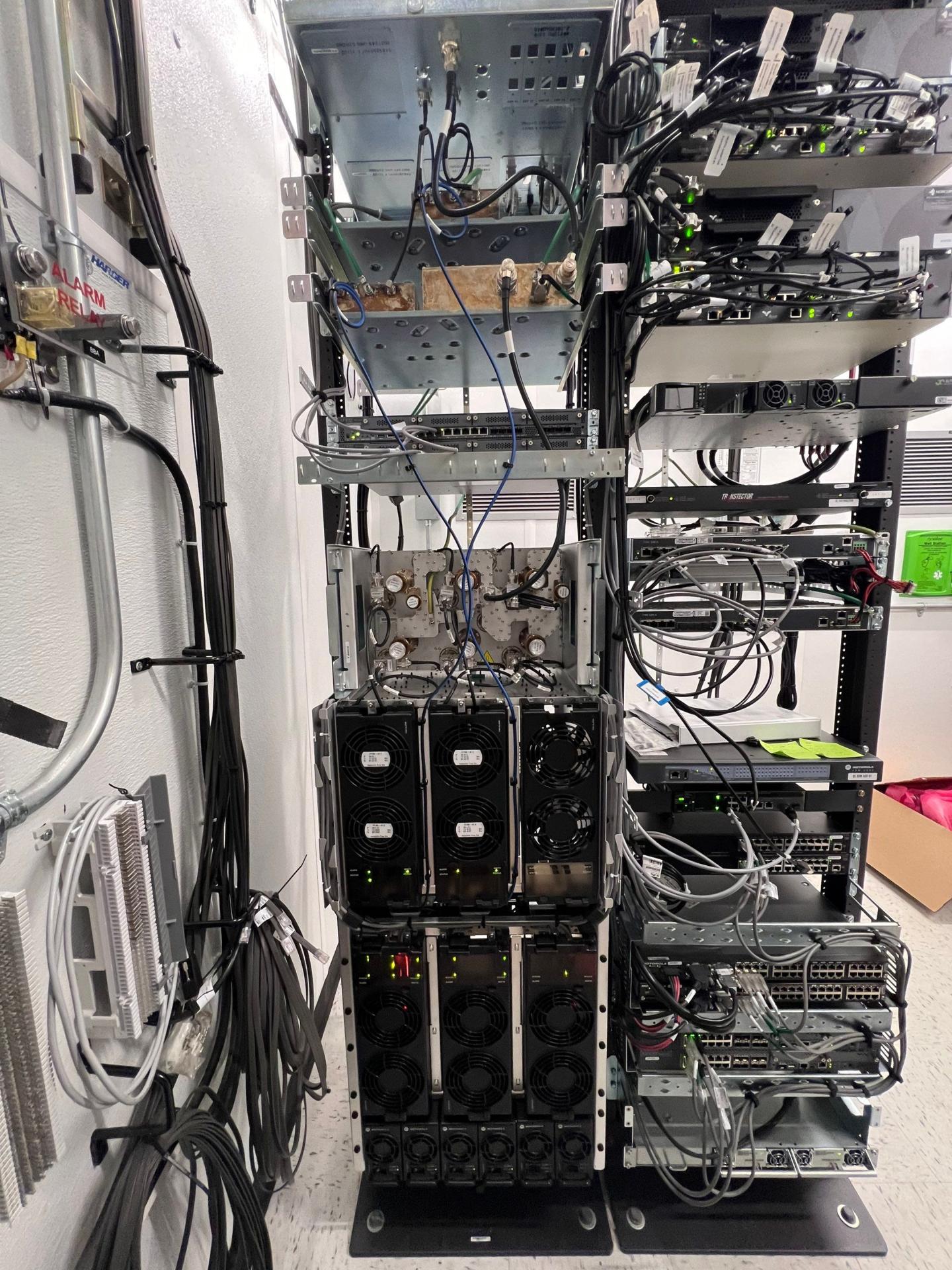
- Building. We routed antenna lines on cable ladder from the roof to the communications room. We specified the connectors, lightning protection and grounding to the main ground bar, and coordinated the GPS reference antenna.
- Handoff to each trade. Lines were terminated and labeled for each user, including police radio and the fire alarm receiver, so each contractor could connect its own equipment.
- Decommissioning. After the move, we had all police, GPS and fire alarm equipment removed from the temporary site on Cary Hall. We kept usable antennas as spares at the new station.
The Result
Migration to the new headquarters
LB Comms planned the move with Town IT, the dispatch staff and every vendor, then managed it on site.
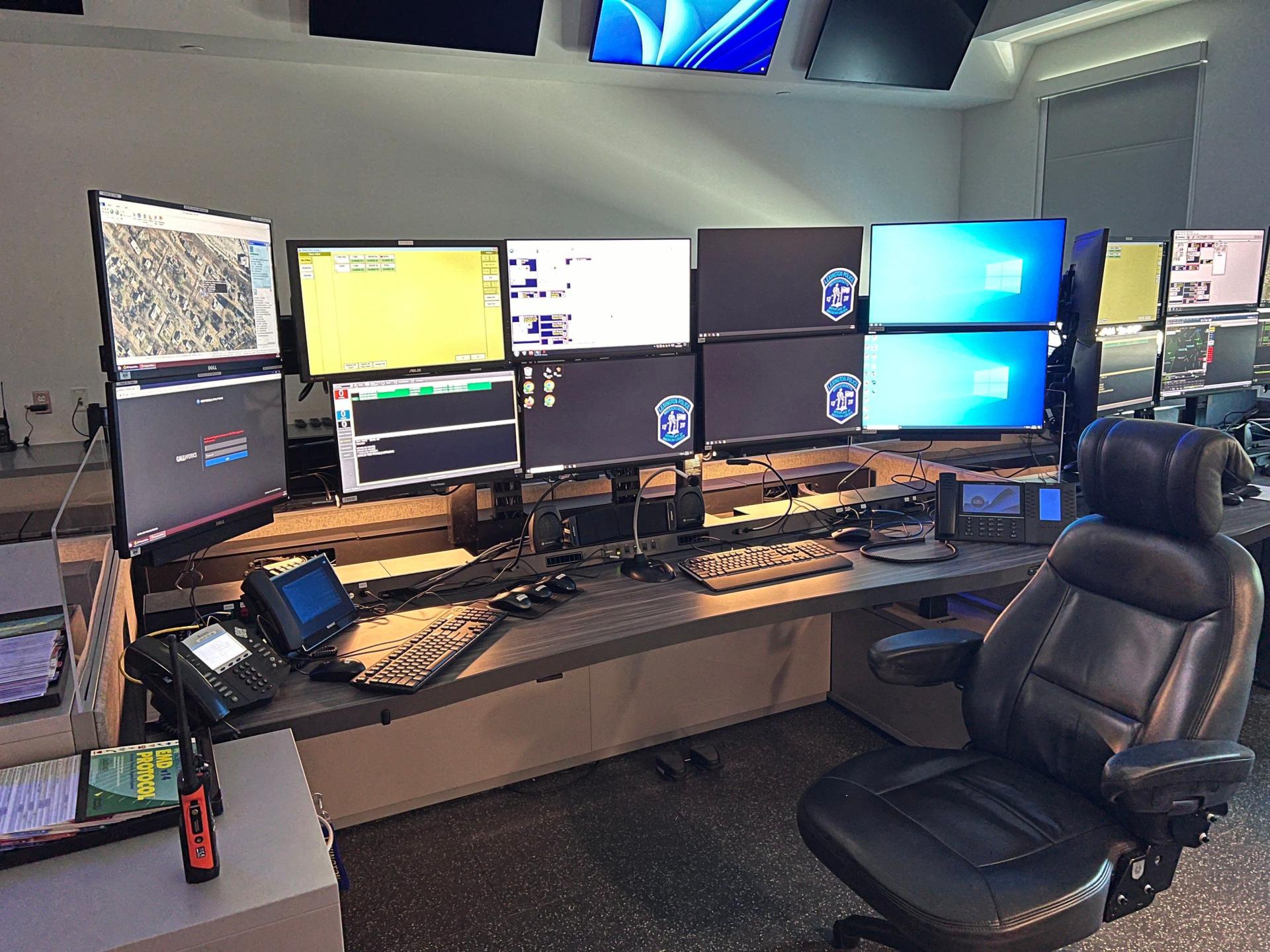
- Watson console furniture. We worked with Watson on the dispatch positions: monitor arrays, technician ports, and cable lengths that leave room for the consoles to move up and down. We also brought IT the parts it needed to connect each workstation.
- Motorola MCC7500E consoles. The department's 4 radio consoles moved into the new dispatch room with new software and new PC workstations. When Motorola upgraded the radio core in September 2024, we got a written record of exactly what was replaced and updated.
- Municipal fire alarm. We coordinated the fire alarm contractor's work in dispatch, including the antenna connection for the radio alarm receiver. That kept municipal fire alarm reporting working in the new building.
- Recording and 911. We coordinated the call recorder integration with Town IT and the recording vendor. The State 911 call-taking system moved on June 27, 2024.
- Closeout. We approved vendor invoices only after equipment was delivered and installed. We collected as-built drawings for cabling, antennas and equipment so the Town has a complete record of the new building.


FREQUENTLY ASKED QUESTIONS

Our portfolio spans complete 911 center modernizations, radio tower integrations, and specialized mobile field comms deployments across New England.
Success is quantified through measured metrics: achieving 99.999% uptime, 100% municipal geographic coverage, and zero-latency transmissions on mutual-aid channels.
Absolutely. We pride ourselves on the trust we've built with local Chiefs of Police, Fire Chiefs, and Town Administrators, and we are happy to provide verified references.
Our decades of project management experience mean we scope accurately upfront, eliminating unexpected change orders and keeping implementations strictly on schedule.